Automatic Awnings in Singapore: How Motorised Awning Systems Work
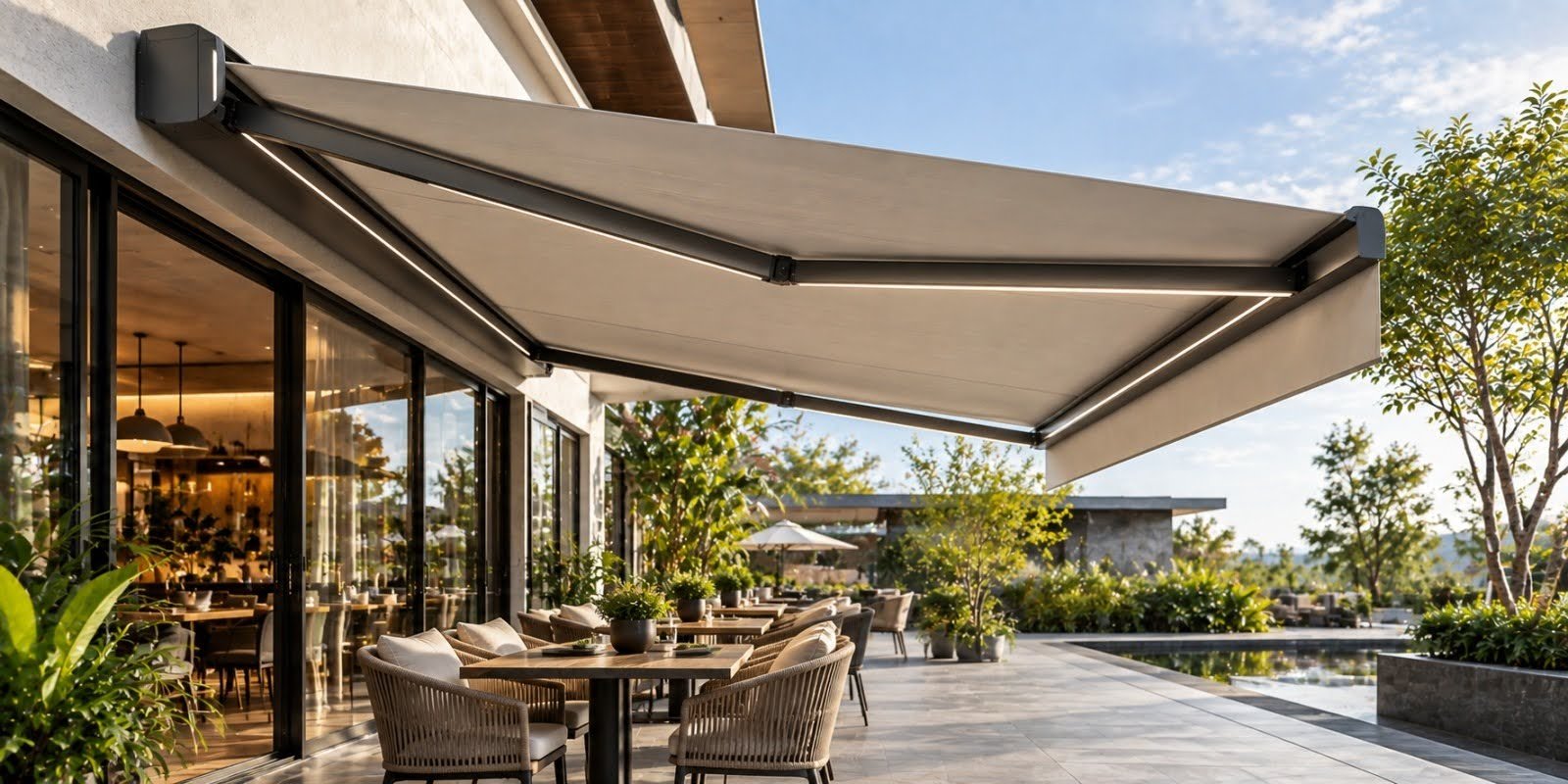
An automatic awning is a retractable shading system that uses a motor to extend and retract the awning instead of requiring manual operation. For property owners considering an automatic awning in Singapore, the main benefit of motorisation is simpler control of adjustable outdoor shade.
The fundamental purpose remains similar to a manual retractable awning: users can cover an outdoor area when shade is required and retract the awning when they prefer a more open space. Motorisation changes how that movement is controlled.
Automatic awnings can be considered for selected residential and commercial spaces where adjustable shade is useful, and regular manual operation would be inconvenient. The exact functions, controls and installation requirements depend on the specific system selected.
An Automatic Awning Is a Motorised Retractable System
An automatic awning combines a retractable covering with a motorised operating mechanism. The motor provides the movement needed to extend or retract the awning.
Users operate the system through the controls supported by the installed product.
This means “automatic awning” should not automatically be interpreted as a fully autonomous system that makes every operating decision itself. In many cases, motorised operation simply means that the user activates the awning through a supported control rather than manually winding or moving it.
The exact level of automation should always be confirmed for the proposed system.
Motorisation Changes the Operation, Not the Basic Purpose
The main purpose of a retractable awning is to provide adjustable coverage. Motorisation makes that adjustment easier to perform.
When shade is wanted, the user can extend the awning. When the outdoor area is preferred open, the system can be retracted.
This flexibility remains the central function whether the awning is manual or automatic.
For property owners, the decision to choose motorisation should therefore be based on how the awning will be used rather than treating an automatic system as a completely different type of shelter.
The Motor Drives Extension and Retraction
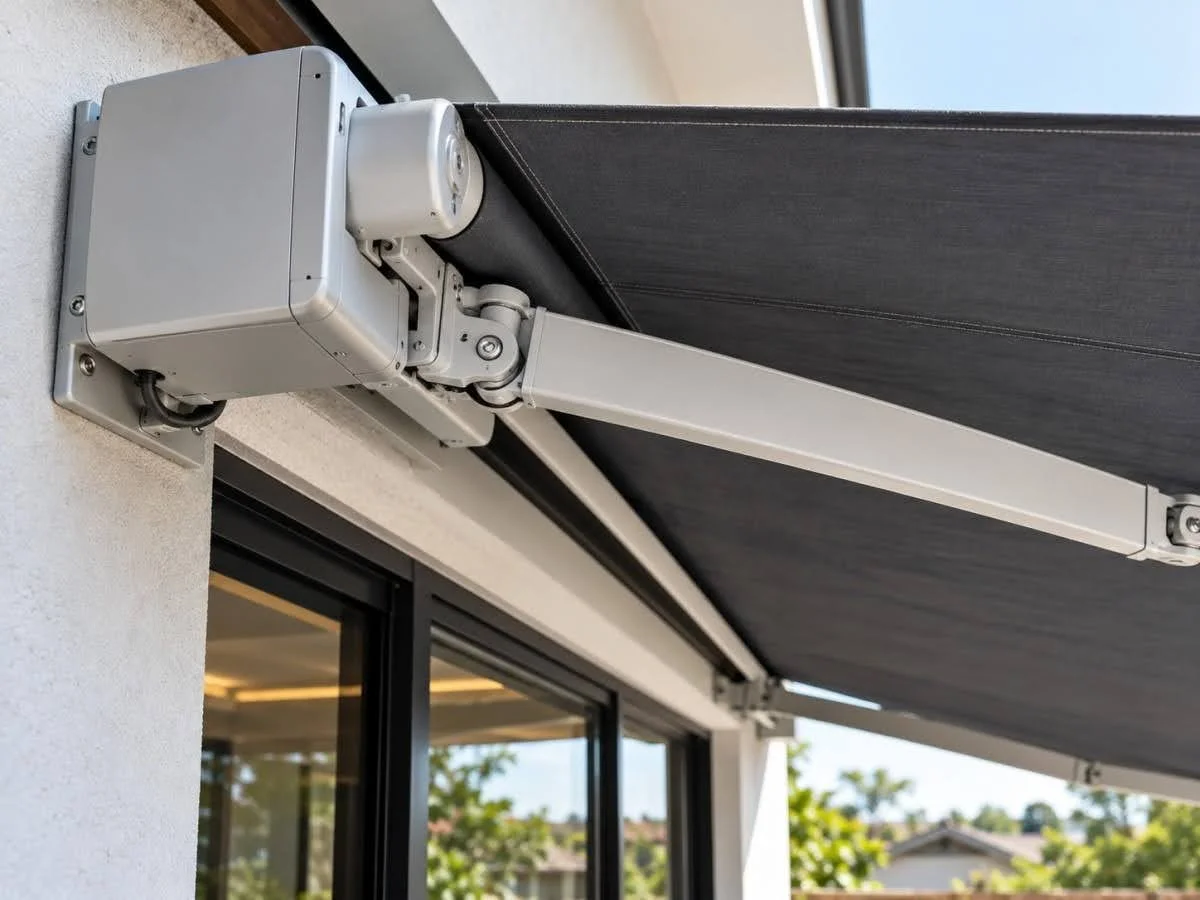
A motorised awning uses its motor and operating mechanism to move the retractable covering between its supported positions.
The exact mechanical arrangement depends on the particular awning system.
Property owners do not normally need to understand every internal component, but they should understand the normal operating method and any limitations provided for the installed product.
The installer should demonstrate how the awning moves, how it is stopped and how it is returned to its stored position.
This basic operating knowledge is important for everyday use.
Controls Should Be Confirmed Before Installation
Automatic awnings can use different control arrangements depending on the system selected. Property owners should confirm exactly what is included before the installation is finalised.
The important questions are straightforward:
How is the awning extended?
How is it retracted?
How can movement be stopped?
Where will the control be located or stored?
Are any additional control functions included?
Only functions supported by the actual system should be assumed. Terms such as “automatic” or “motorised” do not guarantee a particular remote, sensor or smart-home capability.
Remote Control Can Make Adjustment More Convenient
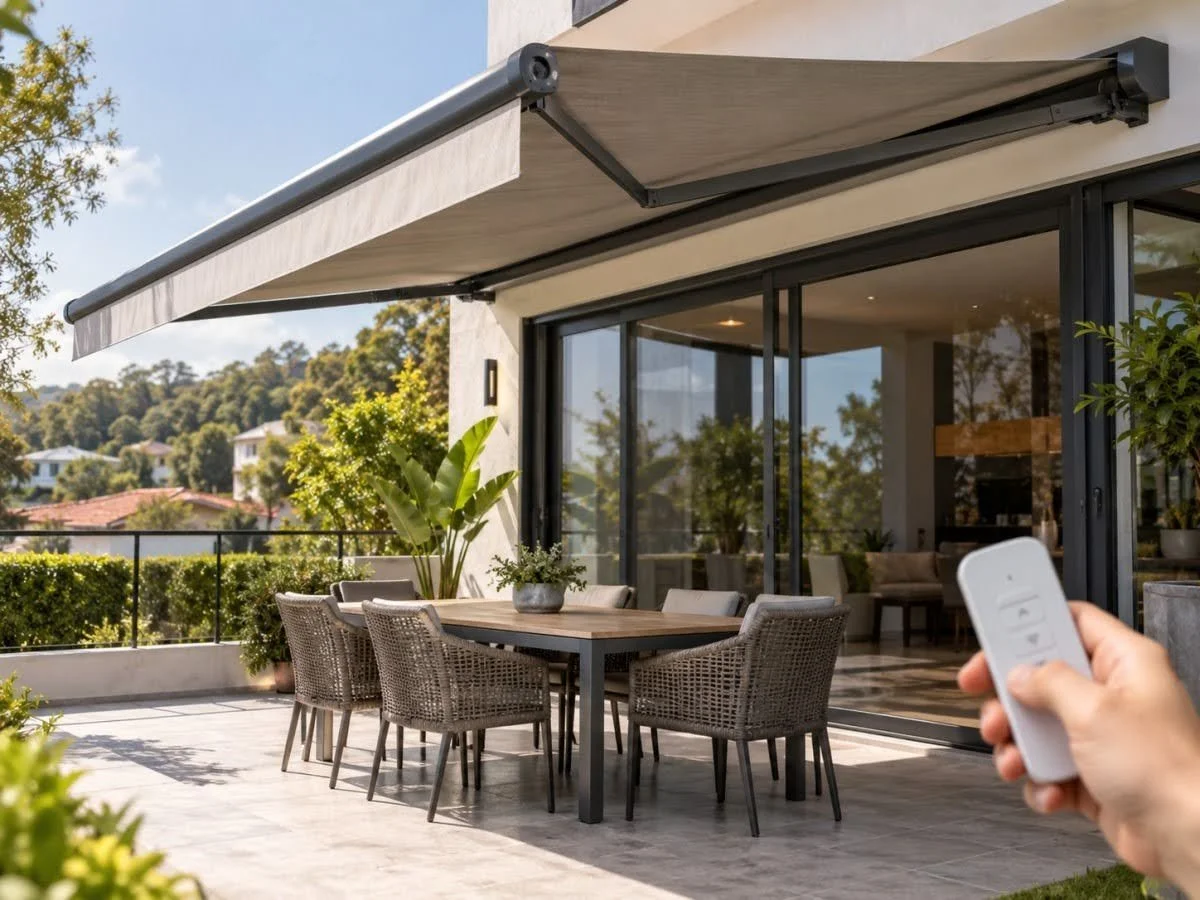
Where a remote control is included with the selected system, users can operate the awning without directly accessing a manual mechanism.
This can be convenient where the awning is adjusted regularly or where the manual operating point would otherwise be inconvenient.
The supported range and functions depend on the actual control system.
Property owners should receive basic guidance during handover so that regular users understand which controls operate the awning and what each function does.
Automatic and Manual Awnings Serve the Same Basic Shading Need
Manual and automatic retractable awnings both provide adjustable overhead coverage. The primary difference is how the user moves the system.
A manual awning requires physical operation through the mechanism provided.
An automatic awning uses motorised movement activated through its supported controls.
Neither option is universally better. A manually operated system can be appropriate where adjustment is infrequent and straightforward. Motorisation can be more useful where the awning will be adjusted regularly or easier operation is a priority.
Frequency of Use Is an Important Selection Factor
The more frequently an awning is adjusted, the more relevant operating convenience can become.
Consider an outdoor area where shade is wanted for several hours during the day, but the awning is normally retracted afterwards. Regular manual adjustment may be acceptable for some users but inconvenient for others.
Motorised operation reduces the physical effort required for this routine.
Property owners should therefore estimate how often they realistically expect to reposition the awning instead of choosing between manual and automatic operation based only on product features.
User Accessibility Can Influence the Decision
The people who will regularly operate the awning should be considered when selecting the system.
A manual control that is practical for one user may be less convenient for another. A motorised system can simplify operation where easier access is an important requirement.
This can be relevant in both residential and commercial properties.
The goal is not necessarily to automate every outdoor feature. It is to choose an operating method that the intended users can manage comfortably and consistently.
Residential Patios Can Benefit from Simple Shade Control
Residential patios and outdoor living areas may be used at different times of day, creating changing shade requirements.
An automatic awning allows occupants to extend coverage when the outdoor area is in use and retract it when an open environment is preferred.
This can be useful where the patio is frequently used for sitting, dining or other household activities.
The awning should still be sized around the actual activity area rather than automatically covering every available part of the outdoor space.
Balconies and Similar Areas Need Site-Specific Assessment
Some balcony-facing or compact outdoor spaces may appear suitable for a retractable awning, but the available installation area needs to be assessed first.
Nearby walls, windows, doors and other building features can affect the possible configuration.
The awning also needs sufficient operating space when extended.
For this reason, property owners should avoid assuming that motorisation makes a retractable system suitable for every compact outdoor area. The physical site still determines whether the proposed installation is practical.
Commercial Properties May Benefit from Easier Routine Adjustment
A commercial awning may be adjusted as part of normal daily operations.
Where staff need to extend or retract the system regularly, motorised operation can simplify the process.
The control arrangement should be understandable to the people responsible for using the awning.
Commercial properties should also determine who should operate the system and where the control will be kept or positioned.
Clear responsibility can help prevent uncertainty when several staff members use the same outdoor area.
Adjustable Shade Can Respond to Changing Sunlight
Sunlight conditions change throughout the day according to property orientation and surrounding buildings.
An automatic awning allows users to respond by changing the amount of overhead coverage when necessary.
This does not mean the awning automatically tracks the sun unless a specific supported system provides such functionality.
In a standard motorised arrangement, the user still decides when to extend or retract the awning.
The advantage is that the physical adjustment can be completed through the motorised controls.
Automation Features Should Never Be Assumed
The term “automatic awning” can create expectations about sensors, timers, remote connectivity or other functions.
These features should only be described as part of a project when the selected product actually supports them.
A motorised awning may simply provide powered extension and retraction through a dedicated control.
Property owners interested in additional automation should ask specifically which functions are available, how they operate and whether they form part of the proposed system.
This avoids confusion between basic motorisation and more advanced automation.
Weather Awareness Still Remains the User's Responsibility
Motorisation makes an awning easier to move, but it does not remove the need to follow appropriate operating guidance.
Outdoor conditions can change, and retractable systems may have limitations regarding when they should remain extended.
The relevant guidance depends on the actual awning product.
Property owners should understand the instructions provided for wind, rain or other weather conditions and should not assume that a motorised awning can remain extended in every situation.
Motorisation Can Make Retraction Easier When Conditions Change
One practical advantage of powered operation is that the awning can be repositioned without manual winding.
Where the system needs to be retracted, the user can activate the supported motorised control.
This convenience is particularly relevant when regular adjustment forms part of normal use.
However, property owners should still remain aware of weather conditions and system guidance rather than relying on motorisation as a substitute for appropriate operation.
The Awning Still Needs a Suitable Installation Location
An automatic awning requires the same basic site planning as other retractable systems.
The property needs sufficient width for the proposed system and enough outward space for its projection when extended.
Doors, windows, lighting, signage and other architectural elements should be identified during assessment.
The mounting position should also relate appropriately to the outdoor area requiring shade.
Motorisation does not remove these physical requirements.
Electrical Requirements Should Be Clarified Before Installation
Because an automatic awning uses a motor, the project can involve electrical considerations that do not apply in the same way to a purely manual system.
The exact requirements depend on the selected product and installation.
Property owners should ask what preparation is required and which parts of the work are included within the proposed scope.
These requirements should be established before installation day so that the motorised system can be planned together with the awning rather than treated as an addition after the physical shelter has already been installed.
Control Location Should Be Planned for Practical Use
Where the system includes a fixed control point, its location should make sense for normal users.
The control should be positioned according to the supported system and property requirements.
For remote-controlled systems, property owners should decide where the remote will normally be kept and who requires access to it.
This may seem like a minor operational detail, but practical control management becomes more important in commercial spaces or properties with several regular users.
The Installation Should Account for Both Awning Positions
A motorised awning should be assessed when fully retracted and when extended.
In its stored position, it should fit appropriately with the façade and surrounding architectural features.
When extended, it should provide the intended coverage without unnecessary conflict with nearby structures.
This two-position assessment is important because the awning changes the physical configuration of the outdoor area during normal use.
The installation should therefore be planned around its complete operating range.
Motorised Operation Should Be Tested Before Handover
Testing is an essential part of completing an automatic awning installation.
The installer should operate the awning through its normal extension and retraction cycle and confirm that the supported controls function as intended.
The property owner or relevant users should also receive a demonstration.
This provides an opportunity to clarify how the system is started, stopped and returned to its normal stored position.
Any supported additional functions should also be explained at this stage.
Users Should Know What Normal Operation Looks Like
Understanding normal operation makes it easier to recognise when something changes.
Property owners should become familiar with how the awning normally moves and responds to its controls.
If operation later becomes noticeably unusual, repeatedly forcing or activating the system may not be appropriate.
The user can instead document the issue and arrange an assessment where necessary.
This simple awareness can be more useful than attempting adjustments without understanding the motorised mechanism.
Maintenance Includes the Mechanical and Motorised System
An automatic awning contains moving and powered components in addition to the retractable covering.
Maintenance should therefore consider the system as a whole.
Property owners can keep accessible areas reasonably clean and observe normal movement during use.
More specific maintenance should follow the instructions for the installed system.
Motor or mechanism-related concerns should be assessed appropriately rather than handled through unverified adjustments that could affect normal operation.
The Awning Covering Still Requires Routine Care
Motorisation does not change the fact that the covering itself remains exposed to an outdoor environment when extended.
Cleaning requirements depend on the material used by the selected awning system.
Property owners should follow suitable care guidance and avoid using harsh products without confirming compatibility.
Leaves or other debris should not be allowed to interfere unnecessarily with the normal operation of the retractable system.
Keep Control and Product Information Available
After installation, property owners should retain relevant information about the motorised awning and its controls.
This can include operating instructions and product information provided during handover.
Keeping this information accessible can be useful when another household member, employee or property manager needs to understand the system.
It can also provide useful context if future servicing or assessment is required.
Questions to Ask Before Choosing an Automatic Awning
Property owners can assess whether motorisation is useful by asking practical questions:
How often will the awning be adjusted?
Who will normally operate it?
What control method is included?
Which functions are actually supported?
What installation preparation does the motor require?
What weather-related operating guidance applies?
How will users know if the system is not operating normally?
These questions focus on everyday usability rather than treating motorisation as a feature that automatically suits every property.
Frequently Asked Questions (FAQs)
What is an automatic awning?
An automatic awning is a retractable awning that uses a motorised mechanism for extension and retraction. Users operate it through the controls supported by the installed system.
Is an automatic awning the same as a motorised awning?
The terms are commonly used to describe retractable awnings with powered operation. The exact level of automation varies, so property owners should confirm the specific functions included with the proposed system.
Is an automatic awning better than a manual awning?
Neither option is universally better. Automatic operation can be useful where frequent or easier adjustment is important, while manual operation may be sufficient for simpler or less frequently adjusted applications.
Does an automatic awning include weather sensors?
Not necessarily. Sensors or other advanced functions should only be expected if they are specifically supported and included in the selected system. Basic motorisation may provide powered extension and retraction without additional automated features.
What should be checked after an automatic awning is installed?
The system should be tested for normal extension, retraction and control operation. Users should also understand the relevant operating instructions and any weather-related limitations provided for the installed awning.
Motorisation Should Make Everyday Use Simpler
An automatic awning is most useful when motorised operation solves a practical need. Frequent adjustment, user accessibility and convenient shade control can all provide valid reasons to choose a powered system.
The decision should still begin with the outdoor space itself. The awning needs appropriate dimensions, operating clearance and a suitable installation location before motorisation becomes relevant.
Property owners should also distinguish basic motorised operation from optional automation features and confirm exactly what the selected system provides.
Plan Motorised Shade Around How You Use the Space
Property owners considering an automatic awning can identify how frequently the shelter will be adjusted, who will operate it and what type of control is practical for the property.
For project-specific guidance on motorised retractable awning applications and installation considerations, contact Moonlight Pte Ltd to discuss the proposed outdoor space.