
How to Choose the Right Awning for Your Property in Singapore
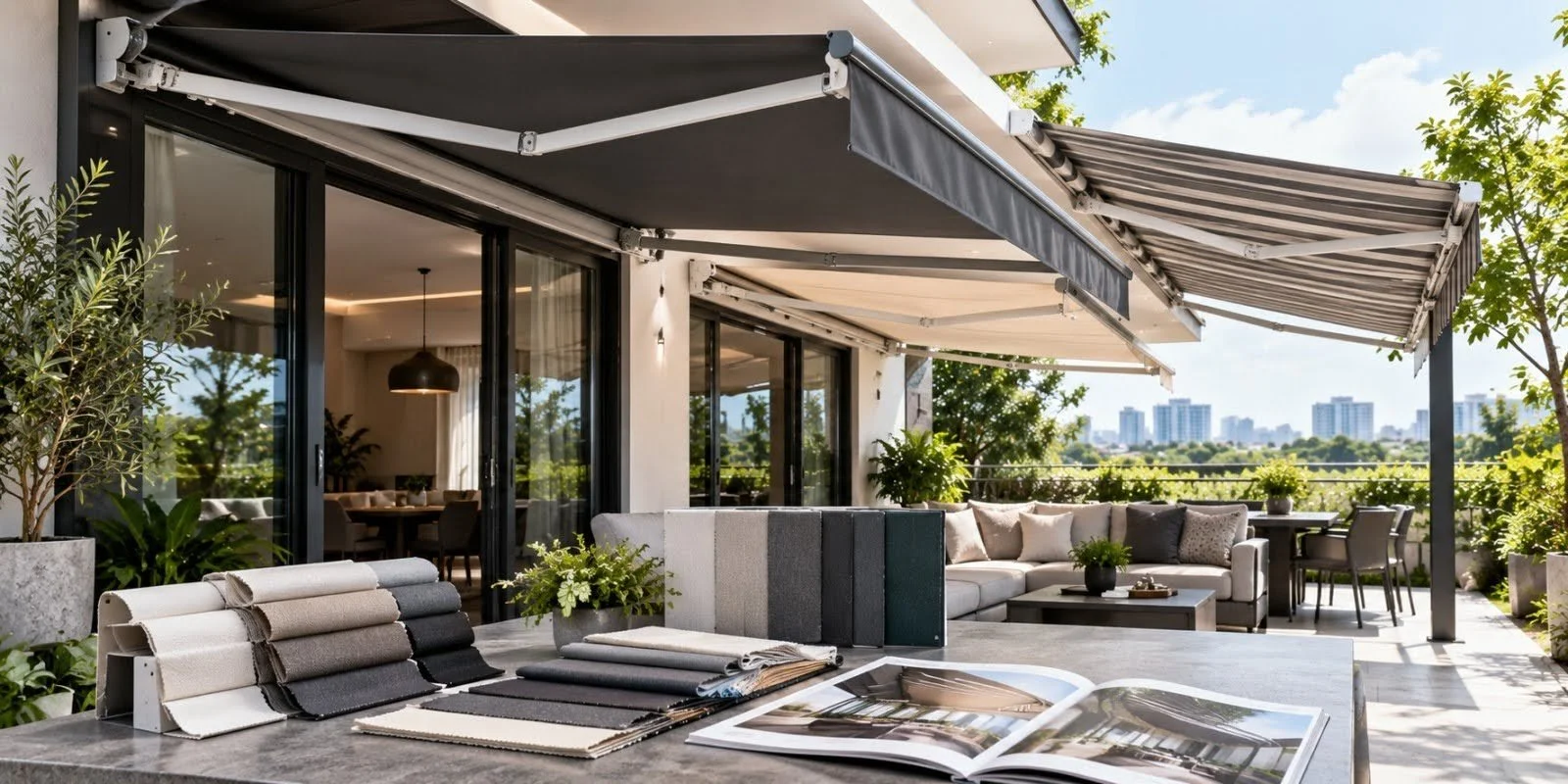
Choosing an awning for a property in Singapore begins with identifying what the outdoor area actually needs. Some spaces require permanent overhead shelter, while others benefit more from adjustable shade. The intended use, location, required coverage, property design and site conditions should therefore guide the decision.
An entrance, patio, walkway and commercial frontage can each require a different approach. Instead of starting with a particular awning material, property owners should first determine how the outdoor space is used and what type of coverage would make it more functional.
This application-first approach makes it easier to compare fixed, retractable and other awning options without repeatedly focusing on individual materials.
Start by Defining the Problem the Awning Needs to Solve
An awning should address a specific outdoor-space requirement. Clearly defining that requirement helps eliminate options that do not suit the property.
One property may need shelter above an entrance so occupants have a covered transition between indoors and outdoors. Another may need shade over a patio used during particular periods of the day. A commercial property could require coverage along an area regularly used by customers or staff.
The main requirement may involve rain, direct sunlight, usability of an outdoor area or a combination of these factors.
Property owners should define the intended outcome before comparing awning types.
Identify the Exact Area That Requires Coverage
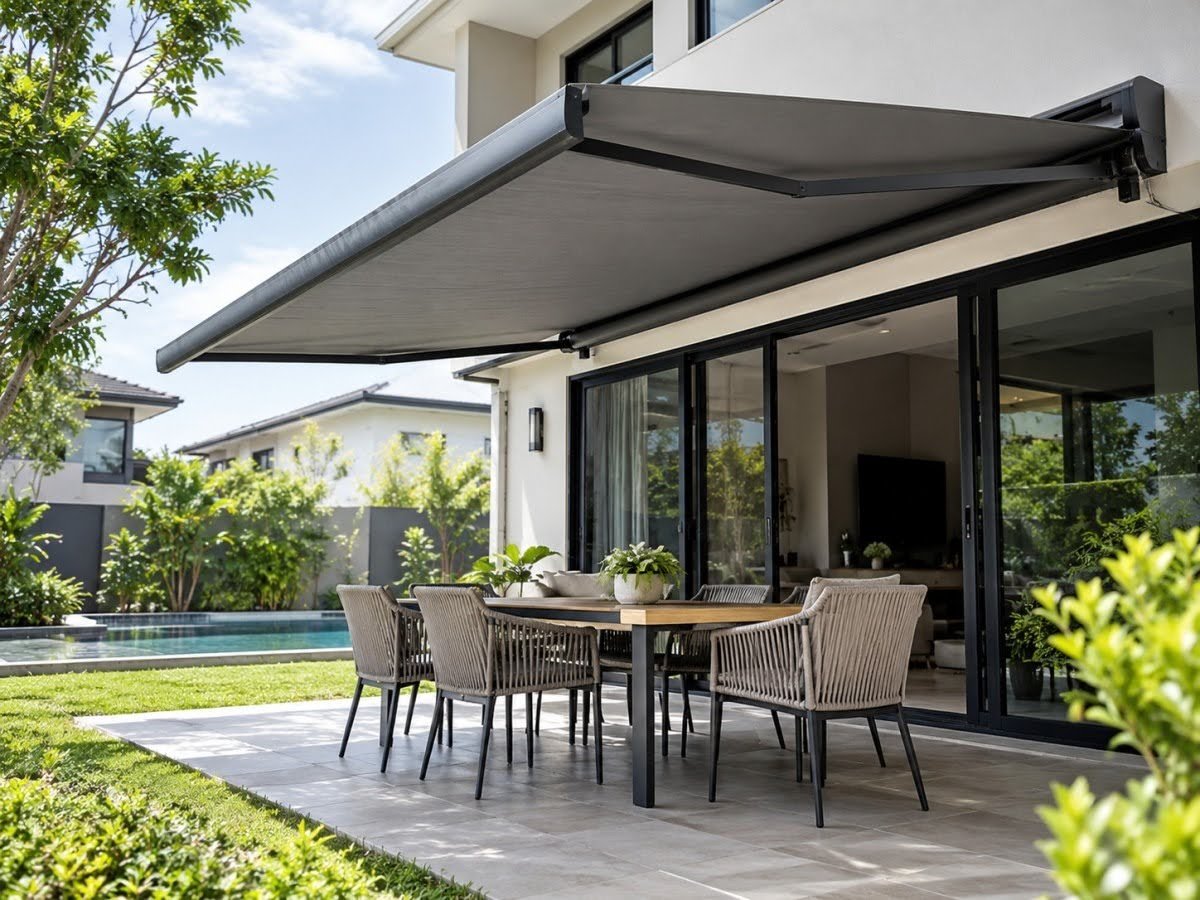
The required coverage area determines many of the decisions that follow. An awning should be sized according to the space it needs to serve rather than simply made as large as the property allows.
For an entrance, this may mean covering the doorway and an appropriate transition area. A patio may require coverage over a seating or activity zone. A walkway could require a longer configuration following a pedestrian route.
The position of doors, windows, lighting, drainage points and other property features can affect the available area.
Identifying the coverage zone early provides a clearer basis for measurement, design and installation planning.
Decide Whether Coverage Needs to Be Permanent or Adjustable
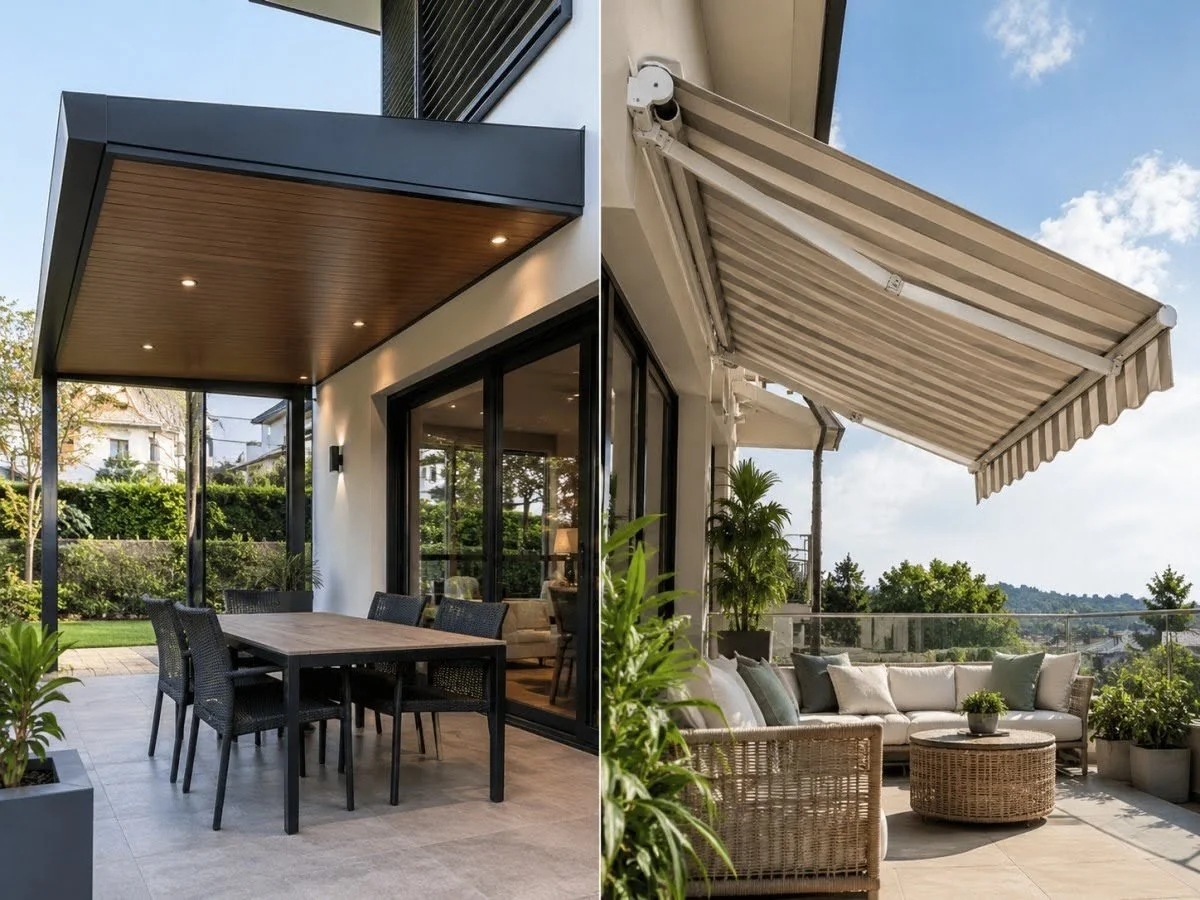
One of the most useful early decisions is whether the space requires fixed or retractable shelter. These systems address different usage patterns.
A fixed awning remains in position and provides continuous overhead coverage. It can be appropriate where shelter is consistently required, such as over selected entrances, walkways or permanent outdoor areas.
A retractable awning can be extended and retracted according to the needs of the space. This makes it relevant where property owners want shade or shelter at certain times while retaining an open overhead area at others.
The choice should therefore reflect how frequently the requirement for coverage changes.
Match the Awning Type to the Property Application
Different awning types are suitable for different applications, and the property itself should guide the selection.
Fixed awnings can be considered where permanent coverage is the priority. Depending on the project, available options can include polycarbonate, composite or aluminium-based systems.
Retractable awnings are more appropriate where adjustable coverage is a meaningful part of how the outdoor area functions.
The material or system should not be selected independently of the application. A suitable awning combines the required form of coverage with the conditions of the installation area.
Entrances Need Focused and Practical Shelter
An entrance awning is intended to provide coverage around the point where people enter and leave a property. The required dimensions should reflect that purpose.
A canopy that only covers the width of a door may not necessarily provide the desired transition area. At the same time, excessive projection may be unnecessary or unsuitable for the property.
The surrounding façade should also be considered. Windows, signage, lighting and existing architectural elements can influence the available installation area.
Water discharge should be planned so that rainfall collected by the awning does not create an avoidable issue near the entrance.
Walkways Require Consistent Coverage Along a Route
Walkway awnings differ from compact entrance shelters because they may need to provide continuous coverage over a longer area.
The design should follow the pedestrian route while maintaining practical access. Supporting components should be positioned with movement through the area in mind.
Changes in building alignment, doors or other structures along the walkway can affect the awning configuration.
For longer shelters, it becomes especially important to consider the entire installation as one system rather than treating each section separately.
Patios and Outdoor Living Areas Need Flexible Planning
Patios and outdoor living spaces can have different requirements depending on how and when they are used. Some benefit from permanent shelter, while others may be better suited to retractable coverage.
The position of seating, doors and circulation routes should be considered when determining the required coverage.
Sunlight can also reach the area differently throughout the day. Property owners should therefore consider when the space is most frequently used and what conditions occur during those periods.
This helps determine whether continuous shelter or adjustable shade is the more practical solution.
Commercial Properties Should Consider How People Use the Space
Commercial awnings should respond to operational requirements as well as the physical property. Customer movement, staff access and the use of outdoor areas can influence the design.
An awning over a commercial entrance may have different requirements from one covering an outdoor service or seating area.
Where people regularly move beneath the shelter, clearances and supporting components should be considered carefully.
A commercial property should therefore evaluate the awning according to actual daily activity rather than selecting a design based only on the building frontage.
Consider Sunlight According to Direction and Time
Sunlight conditions depend on property orientation, surrounding buildings and time of day. This means an awning's usefulness cannot be determined only from its overall size.
A space may receive strong direct sunlight during one part of the day but remain relatively shaded during another.
Property owners should observe when sunlight affects the intended area and where the shade is actually required. The awning projection and position can then be considered in relation to these conditions.
Where reducing direct sunlight is a primary objective, this assessment can be more useful than simply choosing the largest available shelter.
Rain Protection Depends on More Than Having a Roof
An awning can provide overhead rain protection, but the amount of shelter depends on its dimensions, orientation, height and surrounding exposure.
Rain does not always fall vertically. Wind can carry rainfall into an area from open sides, meaning an awning should not automatically be treated as creating a fully protected enclosure.
The required level of shelter should therefore be realistic for the location.
For spaces where rain protection is especially important, property owners should explain how the area is expected to function during wet conditions so the awning can be planned accordingly.
Consider the Relationship Between Shelter and Natural Light
An awning changes the conditions beneath and sometimes inside the neighbouring property. This includes the amount of daylight reaching the covered space.
Opaque fixed systems create different lighting conditions from transparent or translucent options. Retractable systems can provide another approach by allowing the area to alternate between covered and open conditions.
The appropriate choice depends on whether daylight beneath the shelter is an important part of the property's use.
Rather than treating maximum shade as the objective for every project, property owners should consider the balance between coverage and natural light.
Property Architecture Should Influence the Awning Design
An awning becomes part of the building's exterior appearance. Its dimensions, form and position should therefore relate to the architecture around it.
A large shelter can visually dominate a smaller façade, while an undersized awning may appear disconnected from the area it is intended to cover.
Existing rooflines, windows, doors and exterior finishes provide useful reference points during design.
The objective is not necessarily to make the awning visually prominent. In many applications, the most appropriate design is one that provides the required function while fitting naturally into the existing property.
Material Selection Should Follow the Functional Decision
Awning materials should be selected after the required type of coverage has been established. This prevents the project from being driven by a material name rather than the needs of the outdoor area.
For example, polycarbonate can be considered where light transmission is relevant. Composite or other opaque panel systems can be considered where solid fixed coverage is preferred. Retractable systems use flexible coverings appropriate to their operating design.
Each individual product can have different specifications.
Rather than relying on broad claims about durability, heat or weather performance, property owners should review the actual specifications of the system being proposed.
Site Constraints Can Eliminate Otherwise Suitable Options
An awning that appears suitable conceptually may not be appropriate once the installation area is assessed. Existing property conditions can affect what can reasonably be installed.
Relevant constraints can include available mounting areas, doors, windows, roof edges, lighting, signage and other structures.
The proposed awning must also fit within the available space while providing appropriate clearances.
Identifying these constraints early can prevent property owners from developing a preference for an awning configuration that does not suit the actual site.
Drainage Should Be Planned as Part of Fixed Shelter
Fixed awnings collect rainfall and redirect it from the area they cover. The design should therefore account for where that water will go.
Existing drainage points, pedestrian areas and neighbouring property features can influence the appropriate approach.
Larger shelters generally require more careful consideration because they collect rainfall across a greater surface area.
Drainage should not be treated as a separate problem to solve after installation. It is part of determining whether the proposed awning works appropriately for the property.
Think About How the Awning Will Be Used Every Day
A suitable awning should fit into normal property use without requiring unnecessary effort from occupants or staff.
Fixed awnings require little daily interaction because they remain in place. Retractable systems require users to decide when the awning should be extended or retracted.
For manual retractable systems, accessibility and frequency of operation should be considered. Motorised systems can simplify regular adjustment where that convenience is useful.
Daily usage is therefore an important selection criterion, particularly when comparing fixed, manual retractable and automatic options.
Maintenance Access Should Be Considered During Selection
Every exterior shelter requires some level of care, but the important consideration during selection is whether the installed system can be reasonably accessed and maintained.
Leaves and environmental debris may collect around certain areas. Drainage components may need to be checked. Retractable systems also contain moving components that should remain accessible for appropriate inspection.
A design that is unnecessarily difficult to reach can make routine care less practical.
Property owners should therefore ask how the proposed awning will be inspected and maintained after installation rather than considering maintenance only when a problem develops.
Decide Whether Professional Site Assessment Is Required
Professional assessment becomes particularly useful where the property has non-standard dimensions, structural questions, extensive coverage requirements or multiple possible awning configurations.
An awning contractor in Singapore can assess the site, identify relevant constraints and determine what information is required before the system is finalised.
The assessment should connect the intended use of the outdoor area with practical installation conditions.
It can also help distinguish between preferences that can be accommodated and requirements that may need a different solution.
Evaluate an Awning Company Using Project-Relevant Questions
An awning company Singapore property owners consider should be able to explain why a proposed solution fits the particular site.
Useful questions include:
Which awning type suits the intended use of this space?
What area will the proposed dimensions actually cover?
Is fixed or retractable shelter more appropriate?
What site conditions affect installation?
How will rainfall be managed where relevant?
What should be considered for future operation and maintenance?
Specific answers are more useful than broad statements that one awning type is suitable for every property.
Installation Planning Comes After the Main Design Decisions
An awning installation in Singapore should follow confirmation of the application's main requirements. Installation should not be treated as the starting point of the selection process.
Before installation proceeds, the coverage area, dimensions, awning type and relevant site conditions should already be understood.
The project can then move into detailed measurement, preparation or fabrication and installation according to the chosen system.
This sequence reduces the risk of using installation decisions to compensate for an awning that was not appropriate for the space in the first place.
Frequently Asked Questions (FAQs)
What type of awning is suitable for a home in Singapore?
The appropriate type depends on where the awning will be installed and whether permanent or adjustable coverage is required. Entrances, walkways and patios can have different requirements, so the intended application should be assessed first.
Should I choose a fixed or retractable awning?
Choose according to how the outdoor space is used. Fixed awnings are suited to areas requiring continuous coverage, while retractable awnings can be considered where users want the option to alternate between covered and open conditions.
How large should an awning be?
The dimensions should correspond with the actual area requiring shelter and the available installation space. Doors, windows, pedestrian routes and other property features can affect the appropriate width and projection.
Is the awning material the most important consideration?
No. The intended use, required coverage and property conditions should generally be established before selecting a material. Material specifications can then be compared within the awning systems suitable for the application.
When should I speak with an awning contractor?
A contractor can be consulted when accurate site measurements, installation conditions or the suitability of different awning configurations need to be assessed. This is particularly useful for customised or larger installations.
Choose the Function Before the Awning
The right awning begins with the outdoor space rather than the product catalogue. Property owners should first determine what needs to be covered, when coverage is required and how the area is normally used.
These answers help distinguish between fixed and retractable solutions and provide a clearer basis for evaluating dimensions, design and site conditions.
Material selection, detailed installation planning and maintenance considerations can then follow without allowing one product characteristic to dominate the entire decision.
Plan an Awning Around Your Property
Property owners can prepare details about the proposed coverage area, how the outdoor space is used and whether permanent or adjustable shelter is preferred before seeking a site-specific recommendation.
For guidance on selecting an awning configuration based on the requirements of your property, contact Moonlight Pte Ltd. to discuss the proposed application.