
What Should You Look for in an Awning Contractor in Singapore?
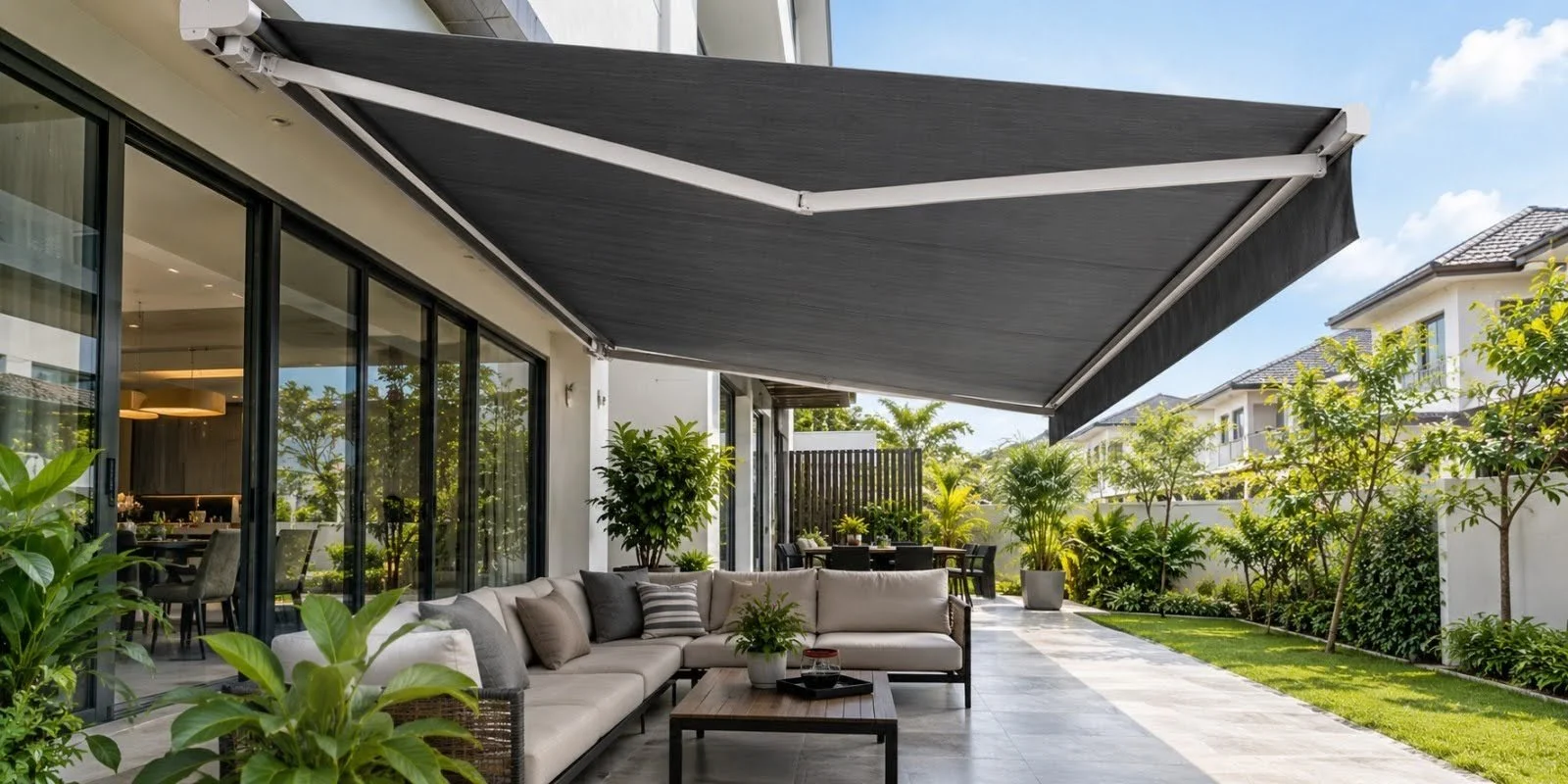
Choosing an awning contractor in Singapore involves more than comparing available awning products. A suitable contractor should be able to assess the property, understand the purpose of the proposed shelter, take accurate measurements, recommend an appropriate system and explain how the project will progress from planning to completion.
Property owners can evaluate contractors more effectively by focusing on evidence of relevant experience and the quality of their assessment process. A contractor should be able to explain why a particular awning is appropriate for the site rather than simply recommending the same solution for different properties.
The objective is to find an awning company that can translate the requirements of an outdoor space into a practical design and installation plan.
Relevant Experience Should Match the Proposed Project
Contractor experience is most useful when it relates to the type of property and awning being considered. The number of years a company has operated provides context, but property owners should also examine the work it actually performs.
A contractor experienced with fixed residential entrance awnings may face different considerations when working on a larger commercial shelter or a retractable system.
Relevant experience can include familiarity with the proposed awning type, similar installation environments and comparable property applications.
Property owners should therefore ask to see examples that resemble the requirements of their own project rather than relying only on general statements about experience.
A Contractor Should Begin by Understanding the Required Outcome
A useful contractor discussion should establish what the property owner expects the awning to achieve. This gives the project a clear functional starting point.
The requirement might involve covering an entrance, creating shade over an outdoor area, providing shelter along a walkway or introducing adjustable coverage.
Different objectives can lead to different awning configurations.
A contractor who understands the intended use can assess whether the initial idea is appropriate or whether another solution should be considered. This is more useful than selecting an awning before the purpose of the project has been clearly defined.
Site Assessment Should Examine the Actual Installation Area
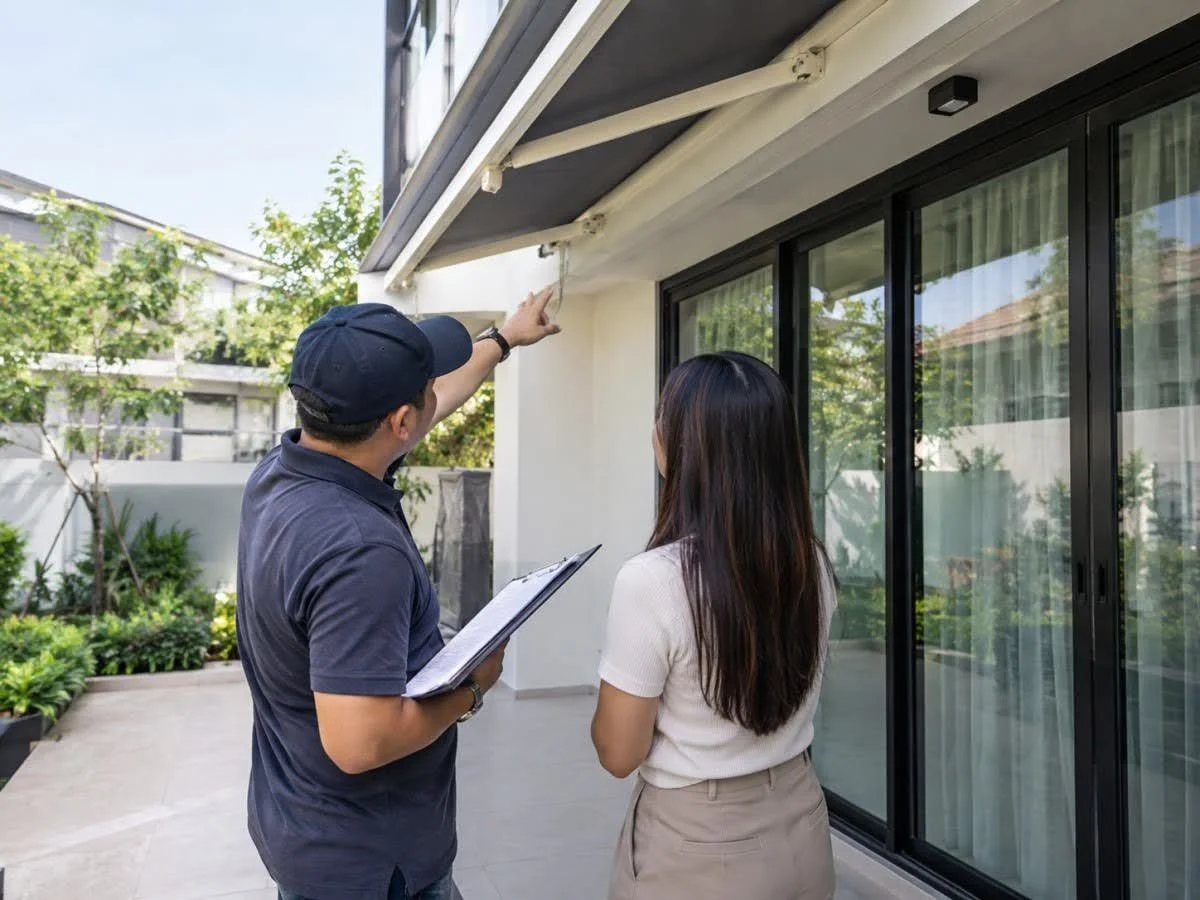
A site assessment allows an awning contractor to evaluate conditions that may not be apparent from photographs or basic dimensions alone.
The assessment should consider the area requiring coverage, nearby property features and the available installation space. Doors, windows, lighting, rooflines and other exterior elements can affect the proposed configuration.
The contractor should also identify conditions that could restrict the design.
A site visit should therefore produce useful information that influences the recommendation rather than function only as a preliminary sales appointment.
Measurements Should Relate to the Required Coverage
Accurate measurement is essential, but dimensions should be connected to how the awning will function. Simply recording the width of a wall does not establish how much shelter the property requires.
The contractor should determine the relevant width, projection, mounting position and clearances according to the proposed system.
For a walkway, measurements may need to follow a longer route. For an entrance, the required coverage may extend beyond the doorway. A retractable system also needs sufficient space for its operating range.
Measurements should ultimately support a design decision rather than exist as an isolated technical step.
Recommendations Should Be Explained in Practical Terms
A contractor should be able to explain why a particular awning type is being recommended. The explanation should connect directly with the property and its intended use.
For example, a fixed system may be recommended where continuous coverage is required. A retractable system may be considered where the property owner wants adjustable shade.
The recommendation should also address relevant site limitations.
Property owners do not need every technical detail at the initial stage, but they should understand the reasoning behind the proposed solution and the alternatives that were considered.
Material Knowledge Should Support the Recommendation
An awning contractor may work with different covering systems, including polycarbonate, composite panels, aluminium-based options and retractable coverings. Material knowledge is useful when it helps determine which system fits the application.
The discussion should not be reduced to broad claims that one material is universally stronger, cooler or more durable.
Instead, the contractor should explain characteristics relevant to the project and refer to actual product specifications where specific performance is important.
This allows material selection to remain connected with the site's requirements rather than becoming a separate comparison of generic properties.
Contractors Should Recognise When a Material Is Not Appropriate
A useful recommendation includes knowing when not to use a particular solution. Every awning type has applications where another configuration may be more suitable.
For example, a property owner who wants adjustable overhead coverage may not achieve that requirement with a permanently fixed panel system. A space where natural daylight through the shelter is important may require different consideration from one where opaque coverage is preferred.
A contractor should be prepared to explain these trade-offs.
The ability to identify unsuitable options can be as important as recommending a preferred one.
Design Should Consider the Existing Property
An awning becomes part of the exterior of a property, so its design should respond to surrounding architectural features.
The contractor should consider how the proposed dimensions, form and position relate to the building. Existing doors, windows, rooflines and façade elements can provide important design constraints.
A customised awning does not necessarily require a visually complicated design. Customisation may simply mean adapting dimensions or configuration to the property.
The objective should be a shelter that performs its intended function while fitting appropriately within the available space.
Fabrication Should Follow Confirmed Site Information
Where an awning requires fabrication or preparation before installation, the contractor should work from confirmed measurements and design details.
Changes made after fabrication can create avoidable complications, particularly where components have been prepared specifically for the project.
Property owners should therefore understand what information must be approved before fabrication begins.
This can include dimensions, awning type, relevant finishes, layout and other project-specific details.
A clear confirmation stage helps establish that both parties are working from the same project requirements.
Installation Experience Should Match the Awning System
Different awning systems can involve different installation procedures. Contractor experience should therefore extend beyond general construction or mounting work.
Fixed awnings, retractable systems and different panel configurations can each introduce distinct requirements.
An experienced contractor should understand the intended installation sequence and how the awning relates to the existing property.
The contractor should also identify situations where other specialist assessment or work may be required instead of assuming that every installation can be handled in exactly the same way.
Installation Planning Should Address Access and Disruption
Awning installation takes place within an existing property environment, which means access and normal use of the area may need to be considered.
For residential projects, occupants may need to keep parts of the installation area clear. Commercial properties may need to consider pedestrian movement, customer access or operating hours.
The contractor should explain what access is required and whether any preparation is needed before work begins.
Clear expectations can reduce avoidable disruption and allow the property owner to prepare the area appropriately.
Project Evidence Should Show More Than Finished Beauty Shots
Completed-project photographs are useful, but the strongest project evidence provides context about the installation.
Property owners should look for examples showing how the awning relates to the building, the area being covered and the surrounding site.
Where available, photographs from different stages can provide additional insight into how the contractor approaches actual projects.
A portfolio containing only close-up photographs of finished surfaces may provide less information than examples showing the complete installation environment.
Relevant project evidence helps property owners judge whether the contractor has worked with comparable applications.
Custom Awning Capability Should Address Real Site Requirements
Custom awnings can be useful where standard dimensions or configurations do not fit the property. However, customisation should have a clear purpose.
A contractor may need to adjust dimensions to fit a particular entrance, walkway or outdoor area. The site may also require a configuration that responds to existing architectural features.
Customisation can therefore be practical rather than decorative.
Property owners should ask which aspects of the proposed awning are being customised and why those changes are necessary for the project.
The Contractor Should Explain the Project Sequence
A clear project sequence helps property owners understand what happens after they decide to proceed. The exact process can vary, but the main stages should be understandable.
A typical sequence may include:
Requirement discussion and site assessment
Measurement of the installation area
Confirmation of the proposed awning solution
Design, material or system confirmation
Fabrication or preparation where required
Installation
Completion checks and operating guidance where applicable
The contractor should explain any additional steps relevant to the specific awning rather than leaving the property owner uncertain about what happens between confirmation and installation.
Completion Checks Are Part of a Professional Installation
The project should not be considered complete simply because the awning has been physically installed.
The completed system should be checked according to the type of awning. Relevant components, positioning and general operation should be reviewed.
For retractable systems, normal extension and retraction should be demonstrated. Where controls are included, users should understand their basic operation.
Property owners should also have an opportunity to identify visible concerns before the project is treated as completed.
Maintenance Guidance Should Be Specific
After-installation guidance should reflect the actual awning system rather than consist only of generic advice to keep it clean.
Different systems have different components and care requirements. A fixed panel awning may require attention to accessible surfaces and associated areas, while retractable systems also include moving components.
The contractor should explain what the property owner can reasonably inspect or maintain and when further assessment may be appropriate.
Product-specific guidance is particularly important where cleaning methods or operating practices can affect the installed system.
After-Installation Support Should Be Clear Before Engagement
Property owners should understand what happens if they have questions after the project is completed. The available support should be clarified before engaging the contractor.
This does not mean assuming that every future issue will automatically be covered. Instead, the contractor should explain the relevant process for reporting concerns and obtaining further assessment where required.
Clear communication is especially useful for systems with moving or motorised components.
Knowing who to contact and what information to provide can make future enquiries easier to manage.
An Awning Company Should Communicate Its Scope Clearly
An awning company Singapore property owners engage should explain what is and is not included within the proposed project.
The scope may cover site assessment, measurement, fabrication, supply and installation depending on the project. Other work may need separate arrangements.
Property owners should clarify these responsibilities before confirming the job.
A clear scope reduces misunderstandings and makes it easier to evaluate proposals from different contractors on a consistent basis.
Ask Questions That Identify How the Contractor Works
Useful questions should help property owners understand the contractor's reasoning and project process rather than simply collect yes-or-no answers.
Questions can include:
Have you completed similar awning projects?
What site conditions affect your recommendation?
Why is this awning configuration appropriate for the area?
What measurements need to be confirmed?
Which parts of the system require customisation?
What happens before and during installation?
What should be checked or maintained after completion?
The quality and specificity of the answers can provide useful insight into how the contractor approaches the project.
Compare Contractors Using the Same Criteria
Contractors are easier to compare when each is assessed against the same practical requirements.
Property owners can compare relevant project experience, site-assessment approach, recommendation quality, measurement process, project evidence, installation capability and after-installation guidance.
This approach avoids placing excessive emphasis on one feature while ignoring the overall service.
The most useful comparison is not which contractor makes the broadest claims, but which one provides the clearest evidence and explanation for the specific project.
Frequently Asked Questions (FAQs)
What should I check before choosing an awning contractor in Singapore?
Check whether the contractor has experience relevant to the proposed awning and property type. Site assessment, measurement, design recommendations, installation capability, project examples and after-installation guidance are also useful areas to evaluate.
Should an awning contractor visit the property before installation?
A site assessment is useful when measurements, mounting conditions, surrounding features or the suitability of different awning configurations need to be evaluated. More complex or customised installations generally require greater site-specific planning.
Why should I ask to see completed awning projects?
Completed projects can show whether the contractor has experience with applications similar to yours. Look for examples that show the full installation and property context rather than only close-up product images.
Should the contractor recommend the awning material?
A contractor can recommend appropriate options based on the application and site conditions. Specific material-performance claims should still be supported by the specifications of the actual product proposed.
What should happen after an awning is installed?
The completed installation should be checked, and normal operation should be demonstrated where relevant. Property owners should also receive appropriate guidance on operation, basic care and how to raise future concerns.
Judge the Process, Not Just the Finished Awning
Choosing an awning contractor is ultimately about evaluating how the company approaches the complete project. Relevant experience matters, but so do site assessment, accurate measurements, clear recommendations, project evidence and communication.
A contractor should be able to explain how the proposed awning responds to the actual property rather than relying on a standard recommendation for every site.
Evaluating the process gives property owners a stronger basis for choosing an awning company than comparing product descriptions alone.
Discuss Your Awning Project with an Experienced Team
Property owners can prepare details about the intended coverage area, property type and how the outdoor space is used before arranging an assessment.
To discuss site requirements, awning options and the appropriate next steps for a proposed installation, contact Moonlight Pte Ltd..